Buy mecklenburg.info ?
We are moving the project
mecklenburg.info .
Are you interested in purchasing the domain
mecklenburg.info ?
domain@kv-gmbh.de · 0541-91531010
Buy mecklenburg.info ?
Is π times d and π times r^2 the same?
No, π times d and π times r^2 are not the same. π times d represents the circumference of a circle, where d is the diameter. On the other hand, π times r^2 represents the area of a circle, where r is the radius. These two calculations represent different properties of a circle and therefore result in different values. **
Is π times d the same as π times r^2?
No, π times d (diameter) is not the same as π times r^2 (radius squared). The formula for the circumference of a circle is π times the diameter, while the formula for the area of a circle is π times the radius squared. The diameter is twice the length of the radius, so they are not equivalent in these formulas. **


Similar search terms for Π
Top-Angebote
Products related to Π:
-
Orion The Book of Humans by Adam Rutherford – A Brief History of Culture, Sex, War & EvolutionWHAT MAKES US HUMAN? Waging war? Sex for pleasure? Creating art? Mastery of fire? In this thrilling tour of the animal kingdom, Adam Rutherford tells the story of how we became the unique creatures we are today. Illuminated by the latest scientific discoveries, THE BOOK OF HUMANS is a dazzling compendium of what unequivocally fixes us as animals, and reveals how we are extraordinary among them.4,98 £*Shipping: 1,99 £Secure redirect to the provider
-
Timeline Refresh 2026 - Clutch Box by Zygomatic, Card Game for 2-4 Players, Ages 10+, History and Culture TriviaTest your knowledge of history, culture, and everyday events with Timeline Refresh 2026, a compact card game for family and friends. Each round challenges players to place event cards in the correct chronological position, using the timeline already on the table as their guide. Choose an event card, estimate when it happened, and add it to the timeline. If your placement is correct, the card remains in play; if not, it is removed. The first player to position all their cards correctly wins. The game's accessible rules and varied subject matter make it an engaging way to challenge your memory and learn interesting facts while playing. The clutch box format is designed for convenient storage and portability.10,39 £*Shipping: 1,99 £Secure redirect to the provider
-
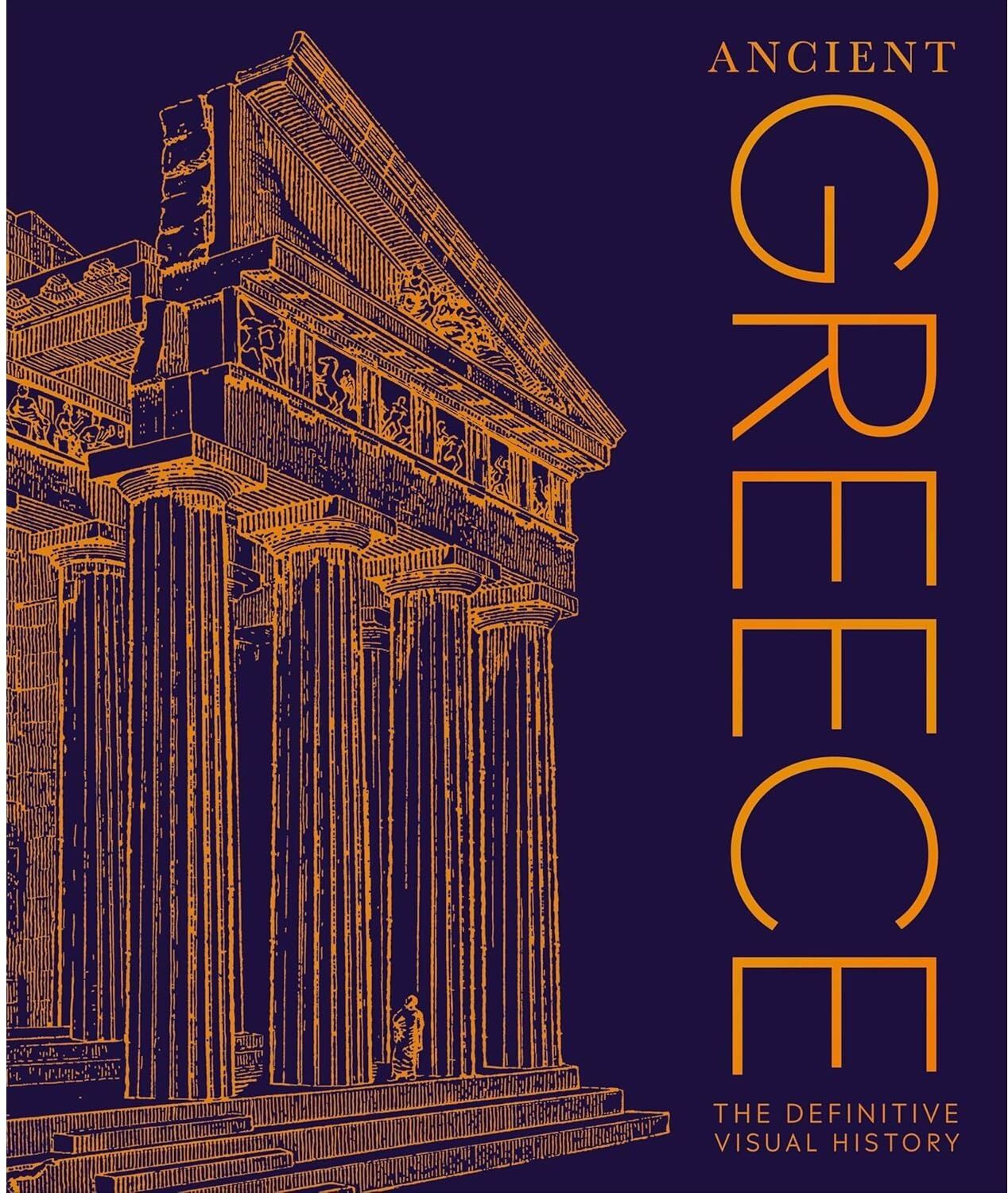
Ancient Greece: The Definitive Visual History (DK Classic History)Embark upon a fascinating journey through ancient Greece – from its rise and fall to its lasting legacy throughout the Western world. Spanning more than 3,000 years, Ancient Greece explores the tumultuous history of this glorious empire in vivid detail – from its Minoan and Mycenaean origins to the apogee of the warring city-states of Athens and Sparta, and from the death of its most charismatic leader, Alexander the Great, to its ultimate defeat by Rome. Sumptuous photography and authoritative, engaging text cover every facet of life in ancient Greece, from art, entertainment, and schools of thought to politics, medicine, and war, while the myths and religious beliefs of the ancient culture are explored and explained in depth. Greece’s military and political power shines through in fascinating maps of its legendary battles. Buried palaces and the Athenian Agora where Plato and Socrates discussed philosophy are brought back to life with stunning CGI artworks. And the stories of everyone from ordinary citizens to lawmakers and the first Olympic athletes are retold through eyewitness accounts and original artefacts.19,99 £*Shipping: 2,99 £Secure redirect to the provider
-
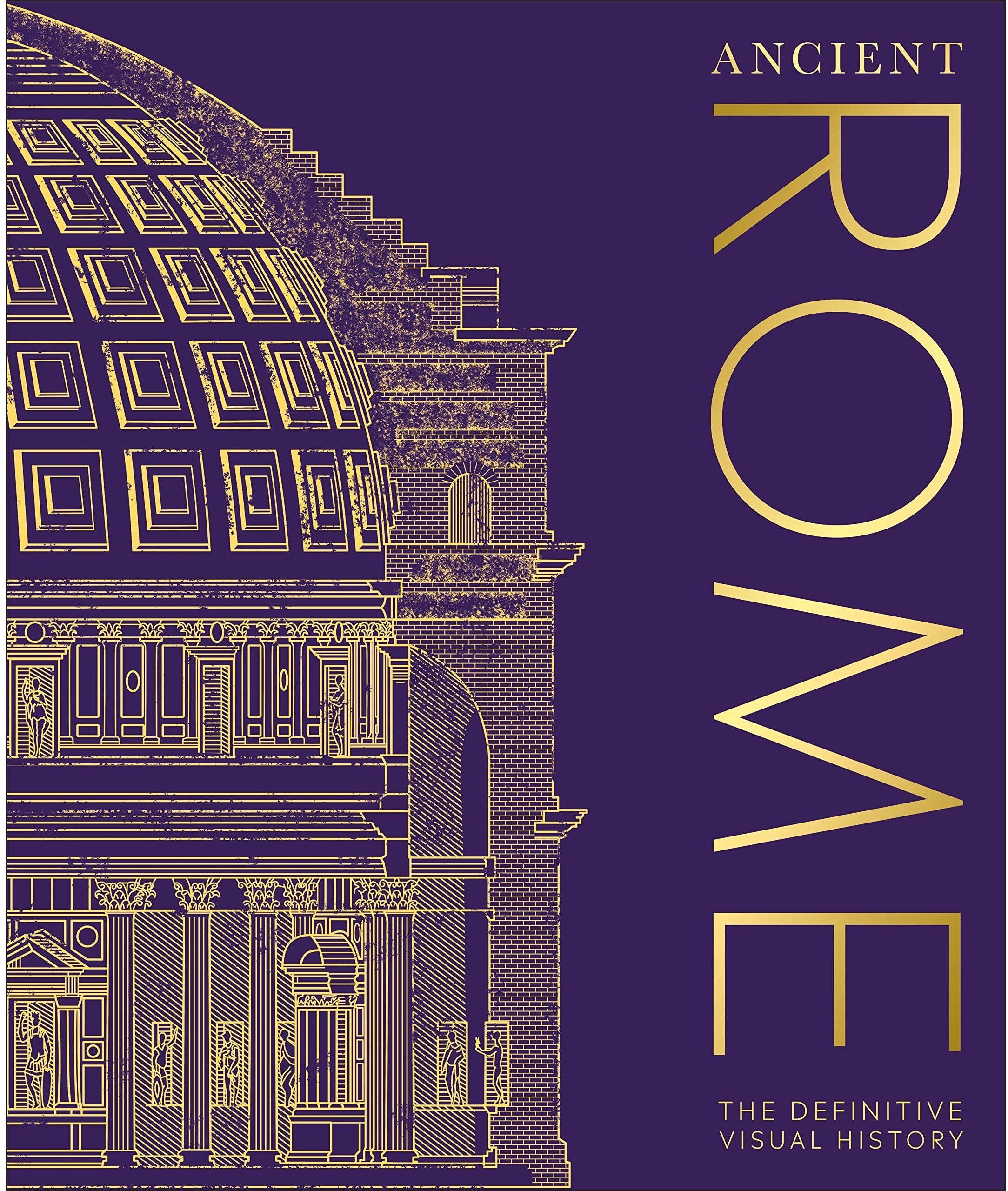
Ancient Rome: The Definitive Visual History (DK Classic History)Immerse yourself in the history of ancient Rome - from its origins as a small settlement on the Palatine Hill to its peak as an empire reigning over 90 million people, and its tumultuous decline. Covering more than 1,000 years of history, and an empire that stretched from Scotland to Syria, Ancient Rome reveals in vivid detail all of the key political, cultural, and military events that shaped the Roman Empire and explores what it was like to live in a society that laid the foundations for many aspects of the modern world. Sumptuous photography and engaging text cover every facet of life in ancient Rome, from art, entertainment, and fashion to engineering, medicine, and war, while detailed maps trace the rise of the mighty Roman Empire. Step back in time in the pages of this history book to discover:- Themed spreads explore developments in areas such as sculpture, religion, warfare, and engineering. - Includes tales of the most dramatic events and battles in Roman history, as well as profiles of influential historical and cultural figures. - An optional 80pp reference section includes sections on rulers, gods and goddesses, and key sites. Featuring Rome's greatest emperors, from Augustus to Constantine, as well as profiles of generals, historians, and influential women, Ancient Rome also delves into the fascinating stories of gladiators, bakers, and enslaved people. The most iconic buildings of Rome are brought to life with specially commissioned CGI recreations, while the stories of ordinary citizens, soldiers, and persecuted groups from across the empire are told with the help of illustrations, artefacts, and eyewitness accounts. Beautifully illustrated and unparalleled in scope, Ancient Rome is the perfect book for anyone who is interested in this defining period of world history.19,95 £*Shipping: 2,99 £Secure redirect to the provider


-
Is sin(x + π/2) simply the sine function shifted π/2 to the left?
No, sin(x + π/2) is not simply the sine function shifted π/2 to the left. The function sin(x + π/2) is equivalent to the cosine function, as sin(x + π/2) = cos(x). This is because the sine function and the cosine function are related by a phase shift of π/2. Therefore, sin(x + π/2) is not just a horizontal shift of the sine function, but rather a transformation to the cosine function. **
-
Why do delocalized π-electrons stabilize the ring?
Delocalized π-electrons stabilize the ring because they can spread out over a larger area, which lowers the overall energy of the molecule. This delocalization allows the electrons to move more freely and reduces the repulsion between them, leading to a more stable structure. Additionally, the delocalized electrons can interact with neighboring atoms or molecules, further stabilizing the ring. Overall, the delocalization of π-electrons increases the overall stability of the ring structure. **
-
How can one prove that e or π is irrational?
One can prove that e or π is irrational by assuming the opposite, that is, assuming that e or π can be expressed as a ratio of two integers. By using properties of irrational numbers and mathematical techniques such as proof by contradiction, one can show that e or π cannot be written as a simple fraction. This demonstrates that e or π is irrational. **
-
Why is cos(x) actually equal to sin(x + π/2)?
The reason why cos(x) is equal to sin(x + π/2) is because of the relationship between the sine and cosine functions. The cosine function represents the x-coordinate of a point on the unit circle, while the sine function represents the y-coordinate. When you shift the angle by π/2 radians, you are essentially rotating the point on the unit circle counterclockwise by 90 degrees. This rotation changes the x-coordinate to the y-coordinate, hence why cos(x) = sin(x + π/2). **


Where does the factor 12√π come from in the Fourier transformation?
The factor 12√π comes from the normalization factor in the Fourier transformation. When we define the Fourier transform as F(ω) = ∫f(t)e^(-iωt)dt, we need to include a normalization factor to ensure that the transform is well-behaved and has the correct scaling properties. The specific value of 12√π comes from the choice of normalization convention used in the Fourier transform. Different conventions may result in different normalization factors, but the factor 12√π is commonly used in many standard formulations of the Fourier transform. **
What is the definition of the very complex formula f = 12 * π * √(l * c)?
The formula f = 12 * π * √(l * c) represents the resonant frequency of a circuit, where f is the frequency in hertz, l is the inductance in henries, c is the capacitance in farads, and π is a mathematical constant approximately equal to 3.14159. This formula calculates the frequency at which the inductive and capacitive reactances in the circuit cancel each other out, resulting in a purely resistive impedance. It is commonly used in electrical engineering and circuit analysis to determine the resonant frequency of a circuit. **
Top-Angebote
Products related to Π:
-
From the Archives: Black History and Culture Value PackThis brand-new series is rooted in a profound commitment to shedding light on some of the important -- and often lesser-known -- aspects of Black history. From the Archives features landmarks, events, people, and artistic endeavors that have played...26,99 $*Shipping: 0,00 $Secure redirect to the provider
-
Perfect Picks Market Beach Sand Castle Bucket Set For Kids Fun Outdoor Sandbox Toys green CastleBring imagination to life under the sun with this delightful kids sand toys set designed for endless beachside fun. Whether its a family day at the shore or backyard playtime, this vibrant beach sand set turns ordinary sand into magical castles and...34,97 $*Shipping: 0,00 $Secure redirect to the provider
-
Orion The Book of Humans by Adam Rutherford – A Brief History of Culture, Sex, War & EvolutionWHAT MAKES US HUMAN? Waging war? Sex for pleasure? Creating art? Mastery of fire? In this thrilling tour of the animal kingdom, Adam Rutherford tells the story of how we became the unique creatures we are today. Illuminated by the latest scientific discoveries, THE BOOK OF HUMANS is a dazzling compendium of what unequivocally fixes us as animals, and reveals how we are extraordinary among them.4,98 £*Shipping: 1,99 £Secure redirect to the provider
-
Timeline Refresh 2026 - Clutch Box by Zygomatic, Card Game for 2-4 Players, Ages 10+, History and Culture TriviaTest your knowledge of history, culture, and everyday events with Timeline Refresh 2026, a compact card game for family and friends. Each round challenges players to place event cards in the correct chronological position, using the timeline already on the table as their guide. Choose an event card, estimate when it happened, and add it to the timeline. If your placement is correct, the card remains in play; if not, it is removed. The first player to position all their cards correctly wins. The game's accessible rules and varied subject matter make it an engaging way to challenge your memory and learn interesting facts while playing. The clutch box format is designed for convenient storage and portability.10,39 £*Shipping: 1,99 £Secure redirect to the provider
-
Is π times d and π times r^2 the same?
No, π times d and π times r^2 are not the same. π times d represents the circumference of a circle, where d is the diameter. On the other hand, π times r^2 represents the area of a circle, where r is the radius. These two calculations represent different properties of a circle and therefore result in different values. **
-
Is π times d the same as π times r^2?
No, π times d (diameter) is not the same as π times r^2 (radius squared). The formula for the circumference of a circle is π times the diameter, while the formula for the area of a circle is π times the radius squared. The diameter is twice the length of the radius, so they are not equivalent in these formulas. **
-
Is sin(x + π/2) simply the sine function shifted π/2 to the left?
No, sin(x + π/2) is not simply the sine function shifted π/2 to the left. The function sin(x + π/2) is equivalent to the cosine function, as sin(x + π/2) = cos(x). This is because the sine function and the cosine function are related by a phase shift of π/2. Therefore, sin(x + π/2) is not just a horizontal shift of the sine function, but rather a transformation to the cosine function. **
-
Why do delocalized π-electrons stabilize the ring?
Delocalized π-electrons stabilize the ring because they can spread out over a larger area, which lowers the overall energy of the molecule. This delocalization allows the electrons to move more freely and reduces the repulsion between them, leading to a more stable structure. Additionally, the delocalized electrons can interact with neighboring atoms or molecules, further stabilizing the ring. Overall, the delocalization of π-electrons increases the overall stability of the ring structure. **
Similar search terms for Π
-
Ancient Greece: The Definitive Visual History (DK Classic History)Embark upon a fascinating journey through ancient Greece – from its rise and fall to its lasting legacy throughout the Western world. Spanning more than 3,000 years, Ancient Greece explores the tumultuous history of this glorious empire in vivid detail – from its Minoan and Mycenaean origins to the apogee of the warring city-states of Athens and Sparta, and from the death of its most charismatic leader, Alexander the Great, to its ultimate defeat by Rome. Sumptuous photography and authoritative, engaging text cover every facet of life in ancient Greece, from art, entertainment, and schools of thought to politics, medicine, and war, while the myths and religious beliefs of the ancient culture are explored and explained in depth. Greece’s military and political power shines through in fascinating maps of its legendary battles. Buried palaces and the Athenian Agora where Plato and Socrates discussed philosophy are brought back to life with stunning CGI artworks. And the stories of everyone from ordinary citizens to lawmakers and the first Olympic athletes are retold through eyewitness accounts and original artefacts.19,99 £*Shipping: 2,99 £Secure redirect to the provider
-
Ancient Rome: The Definitive Visual History (DK Classic History)Immerse yourself in the history of ancient Rome - from its origins as a small settlement on the Palatine Hill to its peak as an empire reigning over 90 million people, and its tumultuous decline. Covering more than 1,000 years of history, and an empire that stretched from Scotland to Syria, Ancient Rome reveals in vivid detail all of the key political, cultural, and military events that shaped the Roman Empire and explores what it was like to live in a society that laid the foundations for many aspects of the modern world. Sumptuous photography and engaging text cover every facet of life in ancient Rome, from art, entertainment, and fashion to engineering, medicine, and war, while detailed maps trace the rise of the mighty Roman Empire. Step back in time in the pages of this history book to discover:- Themed spreads explore developments in areas such as sculpture, religion, warfare, and engineering. - Includes tales of the most dramatic events and battles in Roman history, as well as profiles of influential historical and cultural figures. - An optional 80pp reference section includes sections on rulers, gods and goddesses, and key sites. Featuring Rome's greatest emperors, from Augustus to Constantine, as well as profiles of generals, historians, and influential women, Ancient Rome also delves into the fascinating stories of gladiators, bakers, and enslaved people. The most iconic buildings of Rome are brought to life with specially commissioned CGI recreations, while the stories of ordinary citizens, soldiers, and persecuted groups from across the empire are told with the help of illustrations, artefacts, and eyewitness accounts. Beautifully illustrated and unparalleled in scope, Ancient Rome is the perfect book for anyone who is interested in this defining period of world history.19,95 £*Shipping: 2,99 £Secure redirect to the provider
-
Inspired Living Coastal Wooden Fish Wall Decor Set Of 4 For Beach House And Lake House Coastal Wooden Fish Wall Decor Set Of 4 For Beach House And Lake HouseBring home that breezy, bythewater feeling with this charming wooden fish wall decor set. Designed for anyone who loves relaxed, seasideinspired interiors, these fish accents add warmth, personality, and a playful coastal touch without overwhelming...55,97 $*Shipping: 0,00 $Secure redirect to the provider
-
How can one prove that e or π is irrational?
One can prove that e or π is irrational by assuming the opposite, that is, assuming that e or π can be expressed as a ratio of two integers. By using properties of irrational numbers and mathematical techniques such as proof by contradiction, one can show that e or π cannot be written as a simple fraction. This demonstrates that e or π is irrational. **
-
Why is cos(x) actually equal to sin(x + π/2)?
The reason why cos(x) is equal to sin(x + π/2) is because of the relationship between the sine and cosine functions. The cosine function represents the x-coordinate of a point on the unit circle, while the sine function represents the y-coordinate. When you shift the angle by π/2 radians, you are essentially rotating the point on the unit circle counterclockwise by 90 degrees. This rotation changes the x-coordinate to the y-coordinate, hence why cos(x) = sin(x + π/2). **
-
Where does the factor 12√π come from in the Fourier transformation?
The factor 12√π comes from the normalization factor in the Fourier transformation. When we define the Fourier transform as F(ω) = ∫f(t)e^(-iωt)dt, we need to include a normalization factor to ensure that the transform is well-behaved and has the correct scaling properties. The specific value of 12√π comes from the choice of normalization convention used in the Fourier transform. Different conventions may result in different normalization factors, but the factor 12√π is commonly used in many standard formulations of the Fourier transform. **
-
What is the definition of the very complex formula f = 12 * π * √(l * c)?
The formula f = 12 * π * √(l * c) represents the resonant frequency of a circuit, where f is the frequency in hertz, l is the inductance in henries, c is the capacitance in farads, and π is a mathematical constant approximately equal to 3.14159. This formula calculates the frequency at which the inductive and capacitive reactances in the circuit cancel each other out, resulting in a purely resistive impedance. It is commonly used in electrical engineering and circuit analysis to determine the resonant frequency of a circuit. **
* All prices are inclusive of VAT and, if applicable, plus shipping costs. The offer information is based on the details provided by the respective shop and is updated through automated processes. Real-time updates do not occur, so deviations can occur in individual cases. ** Note: Parts of this content were created by AI.